Conversation
We discuss what you feel, how it started and what you want to return to.

Individual care for pain, stiffness and limited movement. Each session combines assessment, hands-on treatment and practical guidance based on your symptoms, activity and goals.
Manual therapy may be useful when a muscle or joint problem makes everyday movement, work or training uncomfortable.
The goal is to reduce symptoms and improve movement—not to “put a disc back” or repair a herniation.
We discuss what you feel, how it started and what you want to return to.
We assess the movements, muscles and joints related to your complaint.
The session is adapted to the findings, your goals and your comfort.
We check what changed and what still needs attention.
You leave with clear advice on movement, exercise or training load when relevant.
A session may combine several approaches. The aim is not to use every technique, but to choose what best fits the assessment and your response.
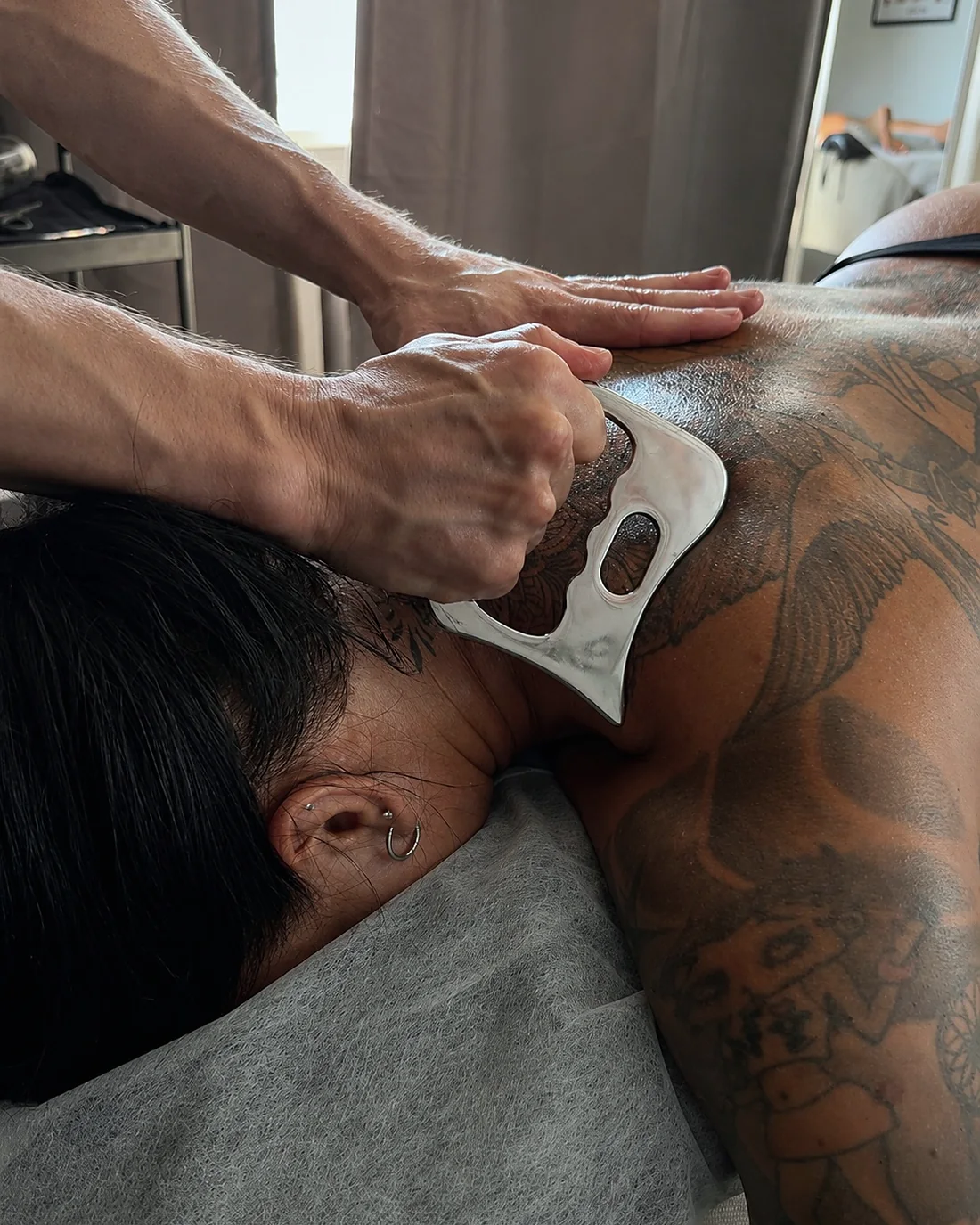
Joint and soft-tissue techniques to make painful or restricted movement more comfortable.
Hands-on work for sore or overloaded muscles and surrounding tissues.
Slow, targeted work for sensitive areas in muscles and fascia.
Focused pressure on locally painful muscular areas when relevant to your symptoms.
A gentle contract–relax technique used to reduce muscle tension and improve mobility.
Simple exercises and movement advice to support progress between visits.
An optional addition for temporary support, movement feedback or symptom relief.
The approach combines current evidence, clinical reasoning and your response during the session.
Manual therapy may reduce symptoms and make movement easier. Exercise, activity changes or medical assessment may also be needed, depending on the situation.
Choose a suitable time. If you are unsure whether this is the right service, send a WhatsApp message first.
Some techniques can feel tender, but the session should stay within a level you can tolerate. Tell Denys at any point if the pressure or position feels wrong.
It depends on the problem, how long it has been present and how you respond. Some people need one visit; persistent or recurring symptoms may need follow-up.
Wear comfortable clothes that let you move. For some assessments or techniques, you may be asked to adjust clothing, always with your consent.
It can help some people manage pain and move more comfortably, especially when combined with suitable activity and exercise. It is not a structural “fix” for the spine or a disc.